
The Complete Cotton Shawl Buying Guide for India (2026)
Cotton shawls are the most versatile accessory in the Indian wardrobe — light enough for summer evenings, warm enough for monsoon mornings, dressed-up enough for festive occasions, casual enough for daily wear. And yet most buyers struggle to tell authentic hand-printed Ajrakh from machine-printed knock-offs, or to know which weight is right for which season. This guide walks through everything — heritage, fabric, prints, authenticity, sizing, styling and care.
1. The Two Main Categories
Ajrakh shawls — heritage hand-block prints
Ajrakh is a textile tradition dating back over 4,000 years, today practised by artisan families in Kutch (Gujarat), Barmer (Rajasthan) and Sindh (Pakistan). Each piece passes through 14–16 stages of hand-block printing, natural-dye baths, and river washing — a 2–3 week process per shawl. Authentic Ajrakh uses indigo for blues, madder root for reds, iron and pomegranate for blacks. The result is unmistakable: deep earthy palettes, symmetric geometric motifs, and prints that appear equally on both sides of the cloth.
Printed cotton shawls — modern designs, broader range
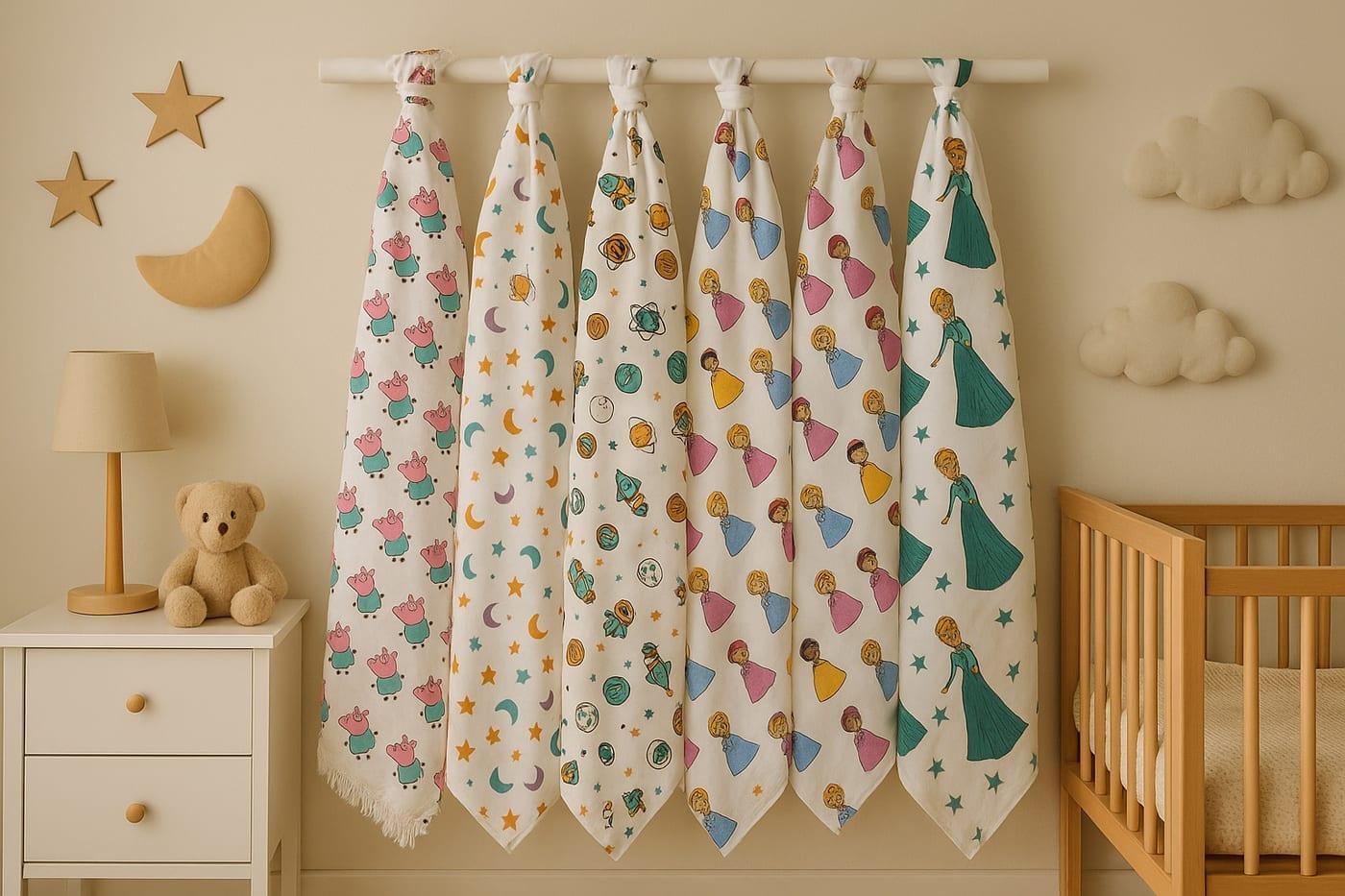
Printed cotton shawls are made by screen-printing or rotary-printing modern designs onto cotton base cloth. They cover a wider stylistic range — florals, animals, characters, abstract patterns — and are more accessibly priced than Ajrakh. The fabric is the same soft, breathable cotton; the difference is in how the pattern is applied and the design vocabulary.
→ Read our deep-dive: Ajrakh Shawls: The 4000-Year-Old Craft Behind India's Most Iconic Block Print.
2. How to Spot Authentic Ajrakh
The market is flooded with machine-printed Ajrakh-style cloths sold as the real thing. Use these tests:
The two-sided print test is the most reliable — Ajrakh's natural dyes penetrate fully through the cotton, so the back looks almost identical to the front. Mass-produced printed cloths show colour only on the printed side.
3. Cotton Quality — The Foundation
Every shawl, hand-printed or machine-printed, starts as plain cotton fabric. The quality of that base cotton determines softness, drape, and how the shawl will feel over time.
- Long-staple cotton — premium choice. Softer, finer drape, more durable. Found in better-quality Ajrakh and mid-to-premium printed shawls.
- Mul cotton — light, breathable, slightly translucent. Great for summer shawls and dupattas.
- Cambric cotton — slightly heavier weave, holds prints crisply. Common in printed cotton shawls.
- Khadi cotton — handspun, hand-woven. Premium niche; the texture is distinctive.
Avoid polyester-cotton blends sold as 'cotton shawls' — they crinkle audibly, don't breathe well, and the prints look flat. A 100% cotton tag is the floor; press the brand for fibre details if you want to spend over ₹2,000.
4. Sizing — Standard Dimensions
Most KaiBee shawls are standard-shawl size (around 100×220 cm) — versatile enough for daily wear and dressed-up enough for occasions. Larger wraps are worth it if you want full-body coverage during travel or air-conditioned indoors.
5. Colour & Print Choice
Ajrakh palettes
Traditional Ajrakh uses a limited but instantly recognisable palette: indigo blue, madder red, off-white, deep black, and occasionally green or yellow. These earthy tones pair beautifully with kurtas, sarees, and dresses across the colour wheel — they almost never clash.
Printed cotton palettes
Printed cotton shawls cover the full colour spectrum. Choose based on the wardrobe you'll pair with:
- Pastels and florals → pair with solid kurtas and dresses, ideal for daytime and brunches
- Bold prints with animals or characters → fun, casual, child-friendly
- Geometric prints → versatile, suit office wear and casual occasions
- Dark backgrounds with floral overlay → evening wear, festive occasions
6. Care — Extend the Life of a Beautiful Piece
Ajrakh shawls — special care
- Hand-wash separately in cold water for the first 2–3 washes — natural dyes settle progressively
- Use mild detergent only; never bleach (it destroys natural dyes immediately)
- Dry in shade — direct sun fades natural pigments over time
- Iron on the reverse side on a low cotton setting
- Store folded with neem leaves or cedarwood — repels fabric moths naturally
Printed cotton shawls — easier maintenance
- Hand-wash first 1–2 times to set the colour, then machine-wash on a gentle cycle
- Use cold water and mild detergent
- Tumble-dry low or line-dry in shade
- Iron on medium heat — printed cotton handles ironing well
7. Styling — How to Actually Wear Them
- Over a plain cotton kurta — turns casual day-wear into festive instantly
- Draped over a dress for evenings out — pairs beautifully with neutral palettes
- Wrap around shoulders during winter weddings — warm, lightweight, photogenic
- Belt over a tunic-and-jeans combo — modern bohemian look
- Folded across the body like a sash — adds dimension to monochrome outfits
- Travel essential — doubles as blanket on flights and AC trains
8. Price — What You Should Actually Pay
Our 2026 Top Picks
₹399
₹799
50% OFF
₹399
₹799
50% OFF
₹399
₹799
50% OFF
₹399
₹799
50% OFF
₹399
₹799
50% OFF
Quick-Decision Summary
- Want heritage + collector piece → authentic Ajrakh, ₹2,000–₹5,000, verify both-sided print
- Daily wear, modern designs → printed cotton, ₹1,500–₹3,000
- Gift for kids → character-print cotton shawl, ₹500–₹1,500
- Travel companion → standard shawl (100×220 cm) in printed cotton
- Skip → polyester blends, unbranded 'Ajrakh' under ₹500
An authentic Ajrakh or premium printed cotton shawl is the kind of accessory that gets better with age, lasts decades with proper care, and works across seasons, occasions and outfits. Buy quality once.