
Ajrakh Shawls: The 4000-Year-Old Craft Behind India's Most Iconic Block Print
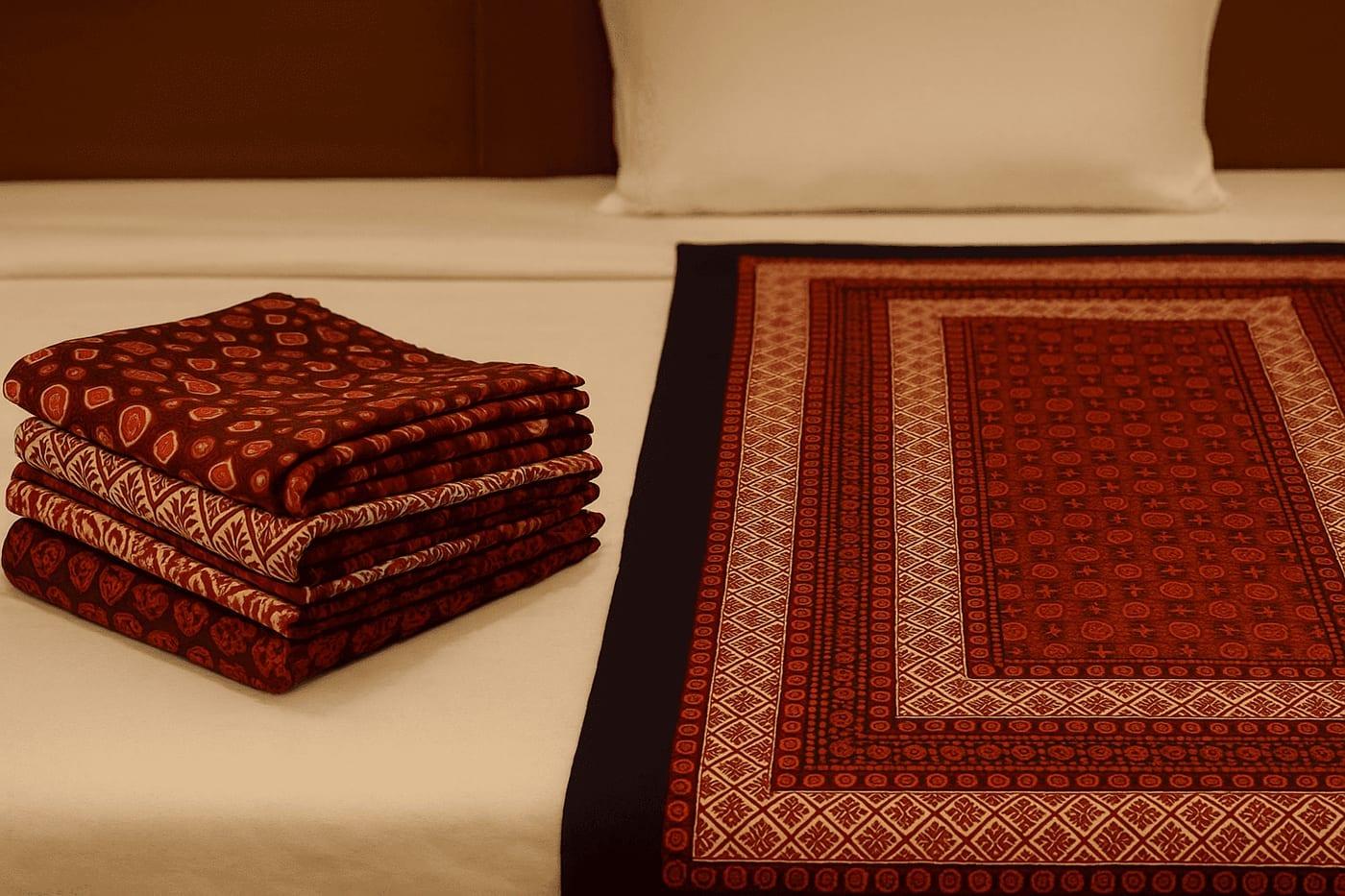
Ajrakh is one of the oldest known textile traditions in the world. Block prints in indigo, madder and natural dyes — geometric, symmetrical, deeply symbolic. The craft survived through the Indus Valley civilisation, was patronised by the Sindhi nobility, and is today practised by a few hundred artisan families in Kutch, Barmer and Sindh. A genuine Ajrakh shawl is a slice of that history.
What Makes an Ajrakh Shawl 'Authentic'?
True Ajrakh goes through 14–16 stages over 2–3 weeks. Every print is applied by hand using carved wooden blocks. Every colour is built up layer by layer using only natural dyes — indigo for blue, madder root for red, pomegranate skin and iron for black. The cloth is washed in the local river or tank between stages — a process modern factories cannot replicate.
The unmistakable hallmarks of authentic Ajrakh
- Symmetrical print on BOTH sides of the cloth — machine printing only does one side
- Slight irregularities in pattern alignment — proof of hand-block printing
- Earthy palette: deep indigo, brick red, off-white, natural black — bright neon colours are a red flag
- Distinct geometric motifs: cintamani, jaalis, stylised florals and stars
- A subtle warm scent from the natural dyes — synthetic dyes have a sharper chemical smell
Why Cotton Ajrakh Shawls Work for Indian Weather
Cotton Ajrakh shawls are the ultimate transitional accessory for Indian climates. The lightweight cotton breathes well in summer and provides just enough warmth on cool evenings and air-conditioned indoors. Unlike wool shawls, they don't trap heat or itch against the skin.
How to Tell Real Ajrakh From Imitation
How to Style an Ajrakh Shawl
- Drape over a plain cotton kurta — instantly turns a casual outfit into festive wear
- Use as a stole over a dress for evenings out — pairs beautifully with neutral palettes
- Wrap around the shoulders during winter weddings — warm, lightweight, photogenic
- Layer over jeans and a white tee — modern bohemian look without trying too hard
₹399
₹799
50% OFF
Caring for an Ajrakh Shawl
- Hand-wash separately in cold water for the first 2–3 washes — natural dyes settle progressively
- Use mild detergent only; never bleach
- Dry in shade — direct sunlight can fade natural pigments over time
- Iron on the reverse side on a low cotton setting
- Store folded with neem leaves or cedarwood — keeps fabric moths away naturally